1. Identify
Select the hive and eligible worker brood using your chosen protocol.
For queen breeders and selection programmes
Classify eligible worker brood cells, record reproductive and non-reproductive mite families, save the result against the hive, and compare VSH evidence with queen source, sister colonies, treatments, survival and production.
Human observation remains primaryBuzzTech organises the assay; it does not invent or diagnose the result.
Assay workflow
Select the hive and eligible worker brood using your chosen protocol.
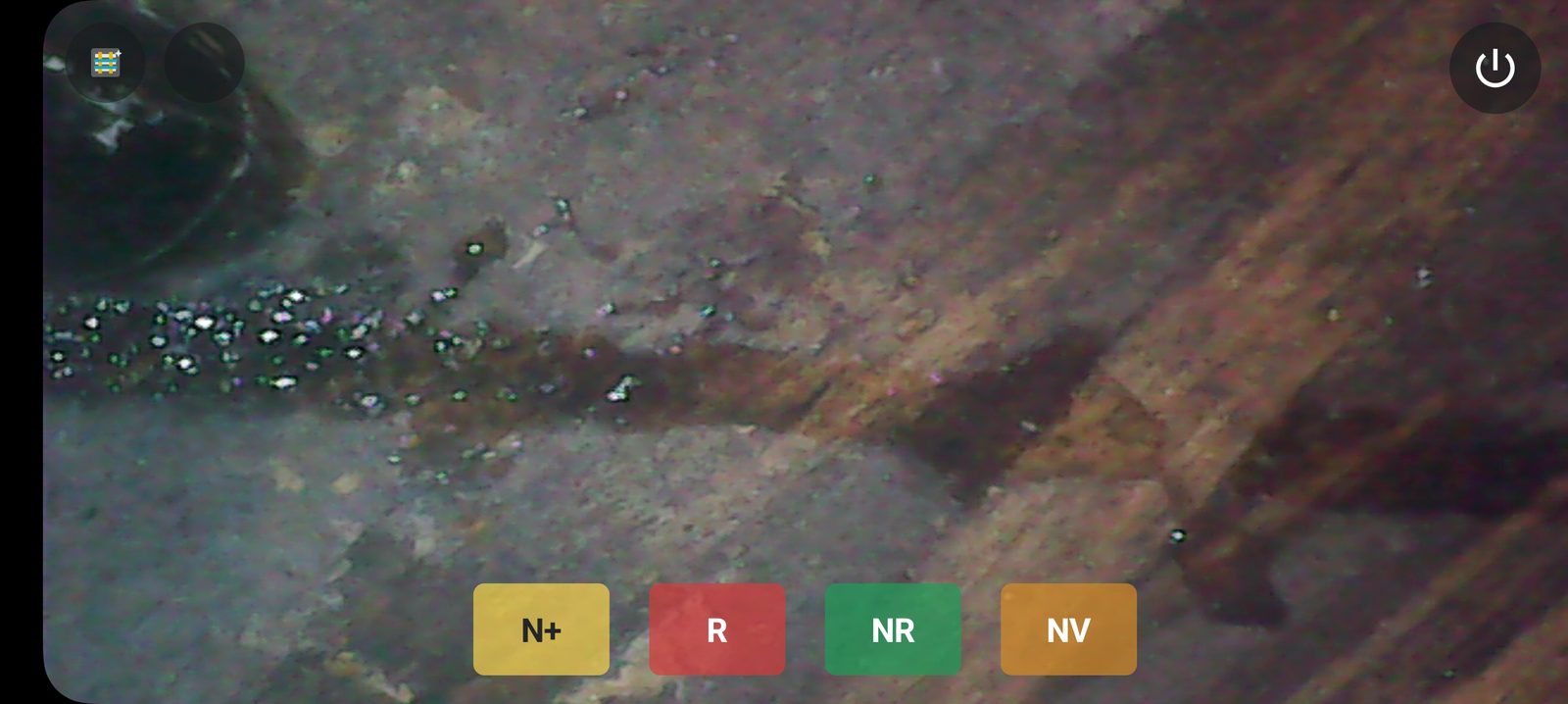
Use direct viewing, a phone camera or a simple endoscope live view.
Record valid cells and mite-family reproductive status consistently.
Review VSH evidence with queen source, related hives and later outcomes.
Selection, not a label
A score is more useful when the underlying observations, sampling date, hive identity and queen lineage remain available. BuzzTech lets programmes compare like with like instead of relying on detached notebook totals.
Cell totals and classifications remain reviewable.
Connect the result with queen source and sister colonies.
Compare assay evidence with survival, treatments and production.
Retain programme records outside a single person's notebook.
Evidence and terminology
Varroa sensitive hygiene concerns worker responses to brood cells containing reproducing Varroa mites. It is not interchangeable with general hygienic-behaviour tests, and it does not remove the need to monitor colony mite pressure.
Protocol references: Penn State Extension VSH testing | USDA-ARS VSH sampling protocol | Harbo Bee Co. measurement resources.
Questions
The hive, date, eligible cells examined, mite-family classifications and the resulting selection evidence.
No. VSH specifically concerns Varroa-infested brood and should not be presented as the same as freeze-kill or pin-kill testing.
No. It supports stock selection. Routine monitoring and locally appropriate management still matter.
Inside the assay flow
The guided flow supports the Harbo method without turning a careful biological assessment into a generic mite counter.
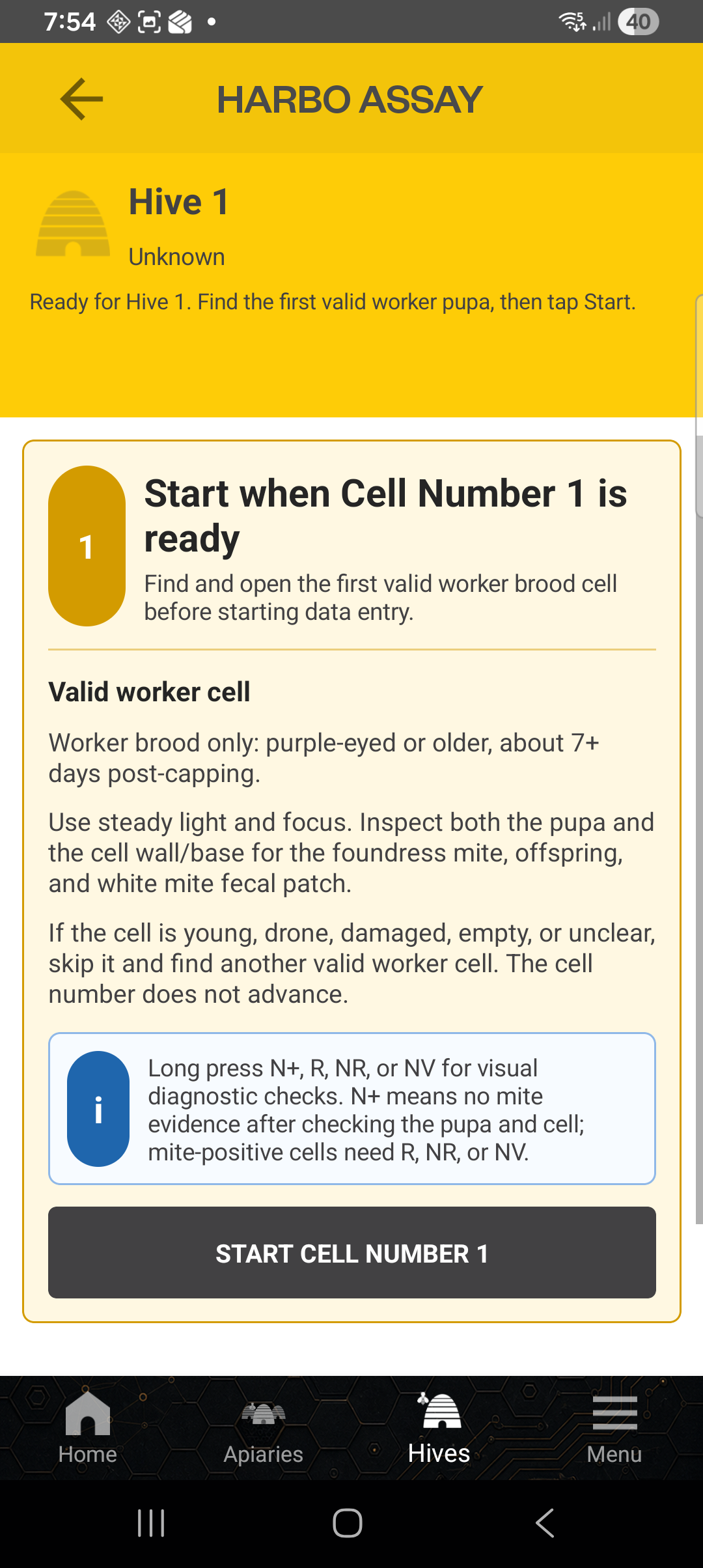
The assay begins from the hive record so the result belongs to the correct colony and queen line.
Use the phone camera or a simple endoscope while the classification choices stay close at hand.
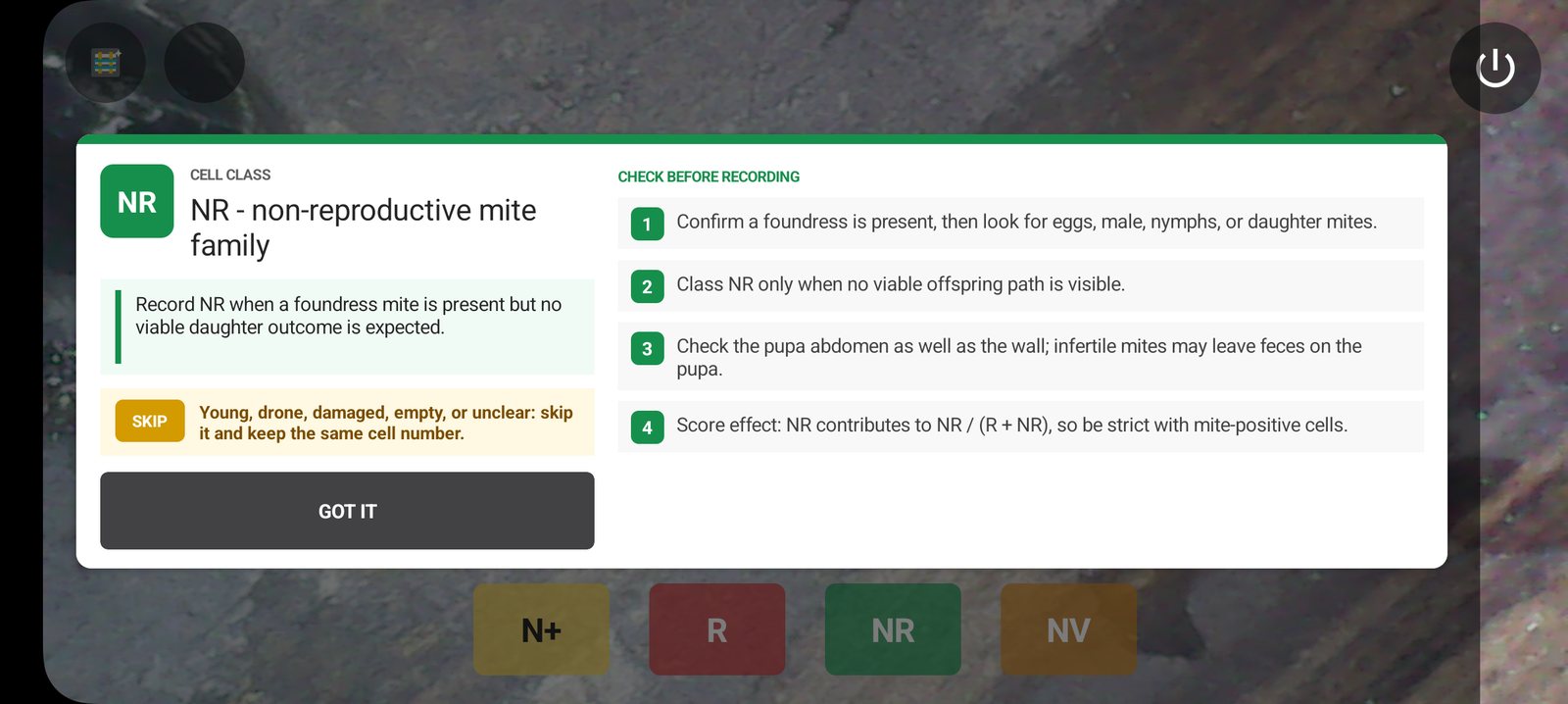
The app preserves the observation behind the final score so review and learning remain possible.
See it working
We walk through BuzzTech as it is used at Forest & Bees: round reports, crew planning, field follow-up and the systems behind the week. You see a functioning business, not a staged demo. We do not need your hive count or operational figures to show it.
Your information stays optionalThe walkthrough uses the Forest & Bees system with permission. You choose whether to discuss your own scale, locations or commercial details.